
Top Benefits of Ayurvedic Shirodhara Treatment for Mind and Body
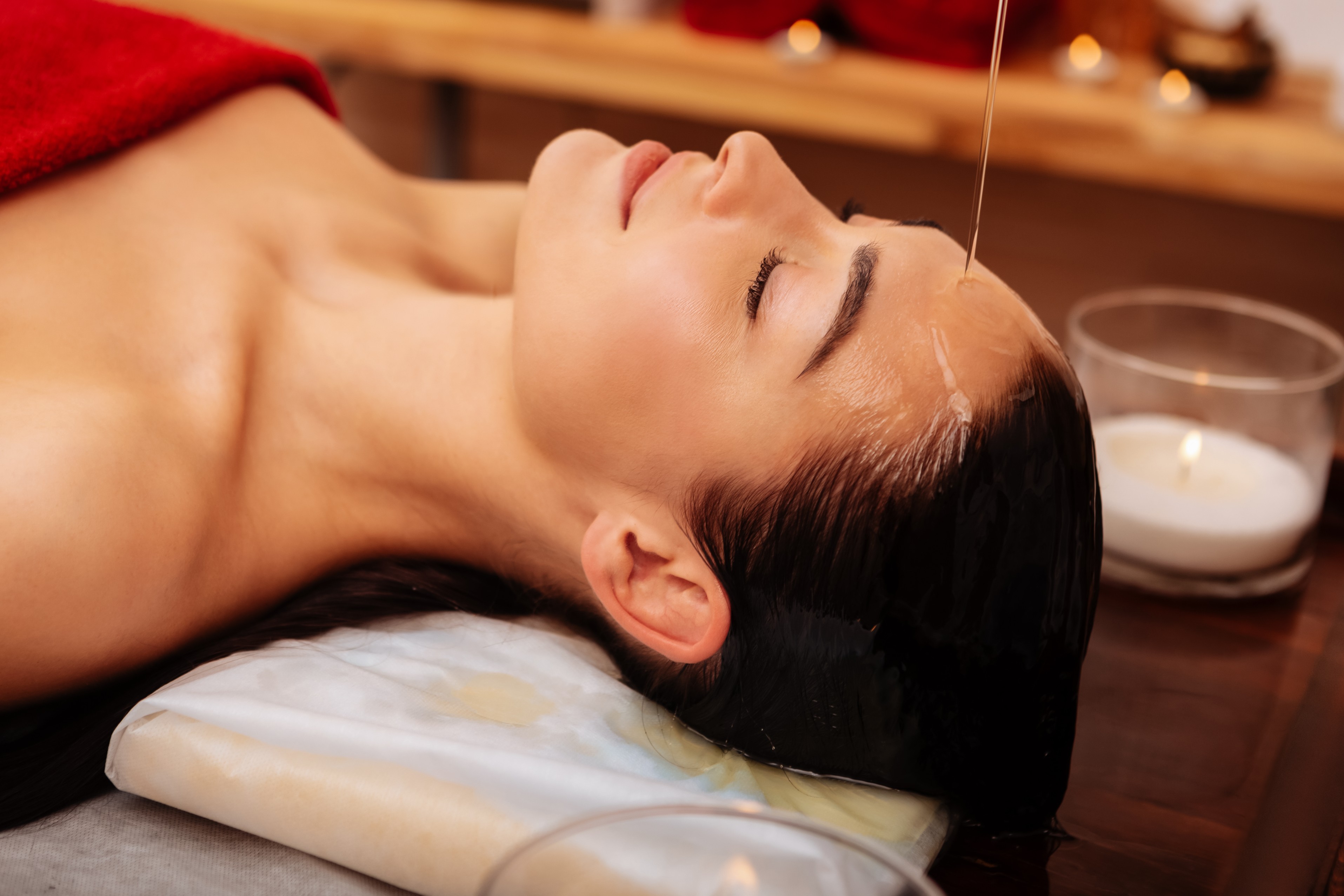
There is a tendency to describe Shirodhara simply as warm oil poured over the forehead. Technically that is true, but it misses the part that matters.
The therapeutic character of Shirodhara comes from rhythm, temperature, continuity and the choice of liquid used. A steady stream is directed over the forehead for a prescribed period while the person remains comfortably positioned and physically undisturbed. The experience is intentionally repetitive. Nothing dramatic is supposed to happen.
That quiet repetition is precisely why people often describe Shirodhara differently from an ordinary head massage.
The body is not being asked to exercise, stretch or respond to strong manual pressure. External stimulation gradually becomes predictable. Breathing often settles. Muscular guarding around the forehead, jaw, scalp, neck and shoulders may begin to ease. The mind is given fewer things to react to.
A small physiological study in healthy volunteers found changes consistent with a relaxed but alert state after standardised Shirodhara, including reductions in heart rate and breathing rate and changes in EEG activity. The study was small, so it should not be stretched into claims it cannot support, but the findings fit rather well with what makes the procedure distinctive: sustained sensory calm rather than sedation.
In Kerala practice, this distinction matters. Shirodhara belongs to a therapeutic system in which the material, duration and treatment sequence are selected rather than treated as decorative parts of a wellness ritual.
That is also why two apparently identical Shirodhara sessions can feel quite different.
Mental Quiet Is Usually the First Benefit People Notice
Stress rarely presents as a single symptom.
A person may say, “I am stressed,” but what is actually happening could be constant mental rehearsal, irritability by evening, difficulty switching away from work, light sleep, tightened facial muscles, a sense of tiredness without the ability to rest, or simply the feeling that the mind is running faster than the body.
Shirodhara is particularly well suited to this restless state because the treatment asks almost nothing from the patient.
No concentration exercise. No conversation. No deliberate attempt to “empty the mind.” That matters.
People under sustained work pressure often turn relaxation itself into another task. They try hard to meditate correctly, breathe correctly or sleep correctly. The effort becomes part of the problem. During Shirodhara, the repeated flow provides an external rhythm around which attention can settle naturally.
Early clinical research is consistent with a calming effect. In a small study of healthy volunteers, stress and mood scores improved following the procedure, alongside physiological changes associated with relaxation. Research involving Shirodhara as part of broader programmes has also reported encouraging findings in areas such as sleep and psychological distress, although the studies remain relatively small.
I would still avoid describing the treatment as a switch that turns stress off. That is not how stress physiology works.
Its real value is subtler. A properly conducted session can create a period in which the nervous system is no longer being continually asked to respond.
For somebody whose normal day moves from phone notifications to traffic, meetings, family obligations and late-night screen use, that period of uninterrupted quiet can be surprisingly meaningful.
Sleep Support Begins Before the Person Goes to Bed
Sleep problems are often approached too late in the day.
People worry about sleep when they are already lying in bed at 11:30 at night. By then, the body has carried the pace of the previous sixteen hours into the bedroom.
Shirodhara approaches the problem from a different direction. The immediate aim is not to force sleep during the procedure. It is to encourage a deeply settled state from which normal sleep may become easier.
This distinction is worth preserving.
A randomised crossover pilot study comparing sesame-oil Shirodhara, with warm-water Shirodhara, in adults reporting sleep problems, found improvement in subjective sleep quality with sesame oil. It was a very small study, involving only 20 participants at recruitment, but it offers useful preliminary evidence for what has long been observed in traditional practice.
Recent reviews are similarly cautious: Shirodhara shows favourable signals for relaxation and sleep, while larger and better-standardised trials are still needed.

From a practical perspective, people seeking Ayurveda Treatment In Kannur for disturbed sleep often benefit from looking beyond the treatment table as well. Daily habits such as meal timing, caffeine intake, evening stimulation, late-night work and irregular waking hours can all influence sleep quality and how restorative a Shirodhara programme feels.
The best Ayurvedic programmes do not isolate the therapy from the person's routine.
Ayur Laya in Kizhunna lists Shirodhara among its signature therapies and also provides programmes centred on stress and sleep concerns, with treatment planning based on consultation rather than a single standard protocol. That is the sensible way to use it.
The Physical Benefit Is Often a Sense of Release Rather Than Stimulation
Some treatments leave the body feeling energised. Shirodhara tends to occupy a different space. Stillness is part of the treatment.
People who spend hours driving, working at a computer, moving between meetings or holding the head and shoulders in a fixed working posture may not realise how much low-grade muscular tension they carry until it begins to release.
Forehead tension. Clenched jaw. Tight scalp. Raised shoulders. Shallow upper-chest breathing. These patterns often travel together.
Warmth and prolonged rest can make the body feel less guarded. When Shirodhara follows an appropriate oil application or Abhyanga, the transition can be even more noticeable because the body has already begun slowing down before the continuous forehead stream starts.
This is where traditional sequencing deserves more respect than it sometimes receives. More oil does not necessarily make a better treatment. A longer session is not automatically superior. Very heavy pressure before Shirodhara is not always desirable either. The objective is to prepare the person for a stable, comfortable period of quiet.
At a professionally run Ayurveda Clinic In Kannur, factors such as constitution, season, scalp condition, general strength, sleep pattern and the purpose of treatment can reasonably influence how the procedure is planned.
Kerala's climate adds a practical consideration. Oil temperature, room comfort and the patient's condition after the procedure need sensible management. People should not finish a calming oil therapy and immediately rush into an over-air-conditioned car, a demanding meeting or vigorous exercise. A little space after treatment improves the experience considerably.
The Choice of Oil Is Part of the Prescription
The liquid flowing from the Dhara vessel should never be regarded as a generic accessory. Sesame-based medicated oils are widely used. Depending on the therapeutic intention, an Ayurvedic physician may choose preparations containing herbs traditionally associated with calming, nourishing or balancing qualities. Brahmi and Jatamansi preparations are familiar examples in Ayurvedic practice.
Other forms of Dhara use different liquids. Takradhara traditionally uses medicated buttermilk. Ksheeradhara uses milk-based preparations. Tailadhara uses oil. The decision is made according to the purpose of the treatment and the individual receiving it.
This is one reason I am wary of menus that present every Shirodhara as interchangeable. The technique may look similar from outside; the clinical thinking should not be.
Temperature matters as well. The flow should remain comfortable and controlled. The height of the vessel, speed of flow, movement across the forehead and treatment duration need consistency. Small details change the entire quality of the session.
Patients usually notice the result without knowing why. A well-managed treatment feels continuous. Poorly controlled pouring repeatedly draws attention back to the equipment.
At an Ayurveda Center in Kannur, Shirodhara also makes more sense when it sits within a wider treatment plan. It may be scheduled alongside Abhyanga, selected rejuvenative procedures, stress-management practices or Panchakarma-related care where appropriate.
Ayur Laya describes its approach as consultation-led and personalised, with Shirodhara, Abhyanga and Panchakarma among the therapies available at its Kizhunna, Kannur clinic. That clinical context is more valuable than simply booking the longest available session.
FAQs
1. What are the benefits of Ayurvedic Shirodhara Treatment for the mind and body?
The principal benefit is a sustained state of mental and physical relaxation. People commonly seek Shirodhara for mental overactivity, stress-related tiredness, difficulty unwinding and disturbed sleep. Physically, the period of warmth and stillness can help release tension around the scalp, forehead, jaw, neck and shoulders. Research remains preliminary, but small studies have reported favourable changes in perceived stress, mood and subjective sleep quality.
2. What is the difference between Shirodhara Treatment and other Ayurvedic therapies?
Shirodhara concentrates on a continuous stream of a selected liquid over the forehead, with rhythm and sustained stillness forming the central part of the procedure. Abhyanga relies on systematic oil application and massage across the body. Kizhi uses warmed herbal or medicated boluses. Pizhichil combines warm oil application with rhythmic pouring over the body. Shirodhara has a particularly quiet, low-movement character.
3. How can Ayurvedic Shirodhara Treatment support better sleep?
Its main contribution is helping the body move from persistent stimulation towards a calmer state. For someone who remains mentally active long after the working day is over, that transition may support easier settling at night. A small randomised pilot study using sesame-oil Shirodhara reported improvement in subjective sleep-quality scores.
4. Is Ayurvedic Shirodhara Treatment suitable for everyone?
It can be adapted for a wide range of adults, but professional assessment is preferable before starting a therapeutic course. The physician can choose the appropriate medium, temperature, duration and accompanying therapies according to the person's constitution, current condition and treatment objective.
5. What oils are commonly used in Ayurvedic Shirodhara Treatment?
Sesame oil and medicated sesame-based oils are frequently used. Brahmi-based and Jatamansi-based preparations are also familiar in Ayurvedic practice. The choice is not made simply on fragrance or preference; the formulation should correspond to the therapeutic purpose.
6. How does Shirodhara Treatment help reduce stress?
The repetitive, predictable stream provides continuous gentle sensory stimulation while the person remains at rest. Small physiological studies have recorded changes such as reduced breathing rate and heart rate together with improved stress and mood scores after standardised treatment, findings compatible with a relaxation response.
7. What are the different types of Shirodhara Treatment?
Common forms include Tailadhara using oil, Takradhara using medicated buttermilk and Ksheeradhara using milk-based preparations. Herbal decoctions or other prescribed liquids may also be used in particular Ayurvedic settings. The form should be selected according to the person's needs rather than chosen merely as a preference.
8. How many Shirodhara sessions are usually recommended?
There is no useful universal number. Some people receive a short sequence, while structured programmes may involve repeated sessions over several days. Published research has used protocols ranging from consecutive-day treatments to seven sessions over two weeks. Clinical scheduling should follow the treatment objective rather than an arbitrary package size.
9. Can Shirodhara be part of a Panchakarma program?
Yes. Shirodhara can be incorporated into a broader physician-planned Ayurvedic programme when appropriate. Its place in the sequence depends on why Panchakarma is being undertaken, the person's strength, constitution and the procedures being used.
10. What is the best time of day for Shirodhara Treatment?
A calm period of the day is preferable, when the patient is not rushing immediately into strenuous work, travel or a heavy meal. Morning sessions are commonly convenient, while appropriately planned later sessions may suit people focusing on relaxation and sleep. Consistency and adequate rest around the treatment usually matter more than chasing a single “perfect” clock time.



Address
Ayur Laya Ayurveda Clinic
Kizhunna, Kannur – 670007
Working Hours
Mon - Sun : 8am to 8pm
© 2026 Ayur Laya. All rights reserved.
© 2026 Ayur Laya.
All rights reserved.